July 2026 | Page 2 of 2 | Digital8

SEO, Google Ads, and Social Media: How to Build a Full-Funnel Marketing Strategy in Australia

Digital marketing is ever-changing, and in the past few years, Australia has experienced a lot of change in the field.

Some notable changes are that customers are slowly moving away from converting through Google search. What they’re doing instead is :

  • Discovering brands on Instagram or TikTok
  • Search Google for reviews and comparisons
  • Click a Google Ad later
  • Watch short-form videos
  • Revise through retargeting campaigns
  • Finally, make a conversion after meeting several touchpoints

The standards have risen, and in 2026, successful marketing takes a lot more than mastering just one channel.

The money is on creating a connected full-funnel marketing strategy where SEO, Google Ads, and social media work cohesively instead of against one another.

For Australian businesses, this change is a necessity as search behaviour, AI-driven discovery, and consumer attention continue to take a new shape at a rapid pace
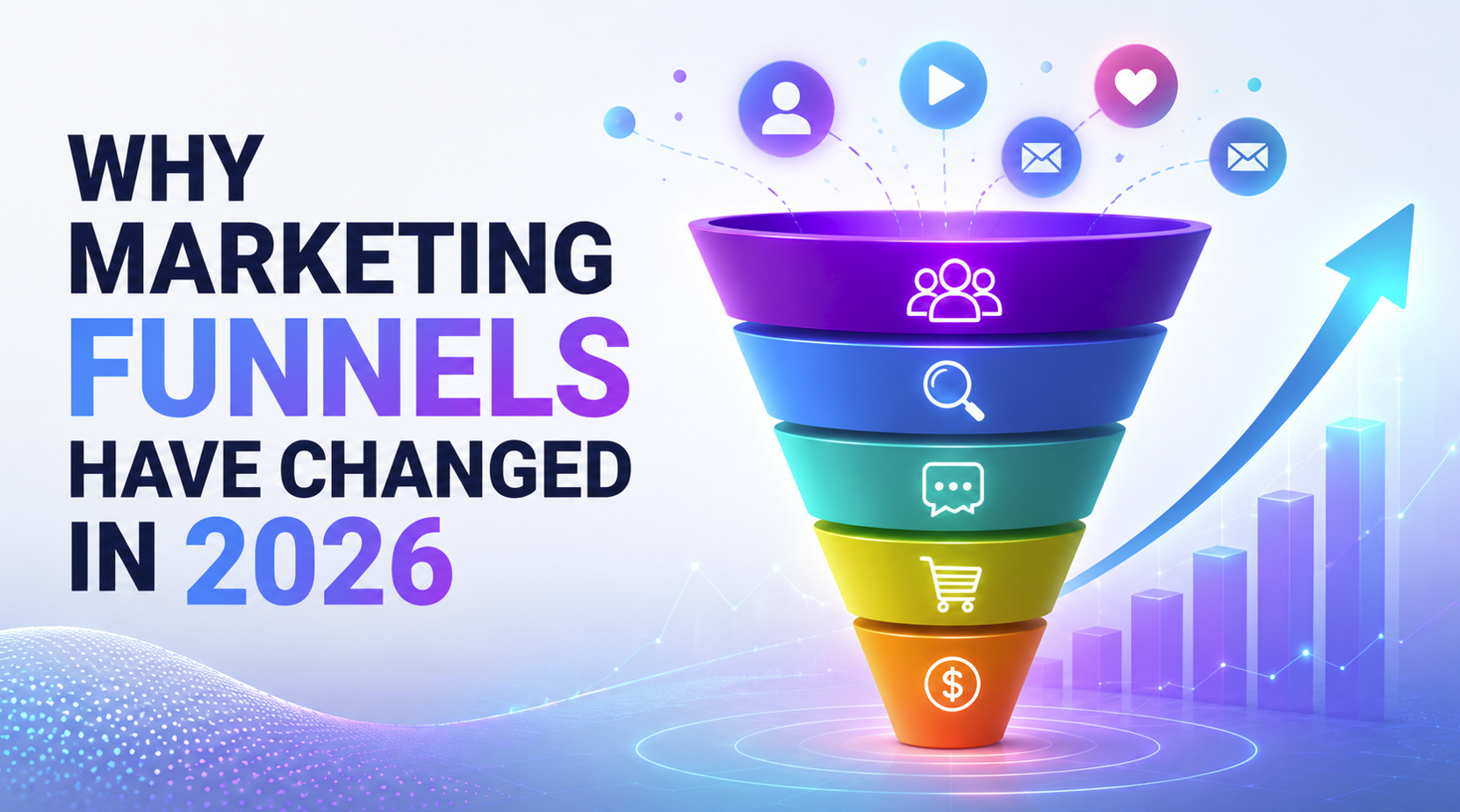
Why Marketing Funnels Have Changed in 2026Why Marketing Funnels Have Changed in 2026

Traditional marketing funnels were easier to get by. In that funnel, a customer usually:

  1. Searches on Google
  2. Pays a visit to your website
  3. Makes a purchase

But now in 2026, the buyer journey is split across a lot of platforms and devices. 

Today, your customer journey looks like this:

  • Finding a reel on Instagram
  • Searching your brand on Google
  • Reading blog content
  • Watching a TikTok review
  • Clicking a Google Ad weeks later

This is mostly because:

  • Social media is transitioning into a search engine of its own
  • AI-generated search summaries reduce direct clicks
  • Attention spans are shrinking
  • Customers are looking for more trust signals before making a conversion


Due to that:

Businesses focusing on one channel are missing out on a lot of visibility.

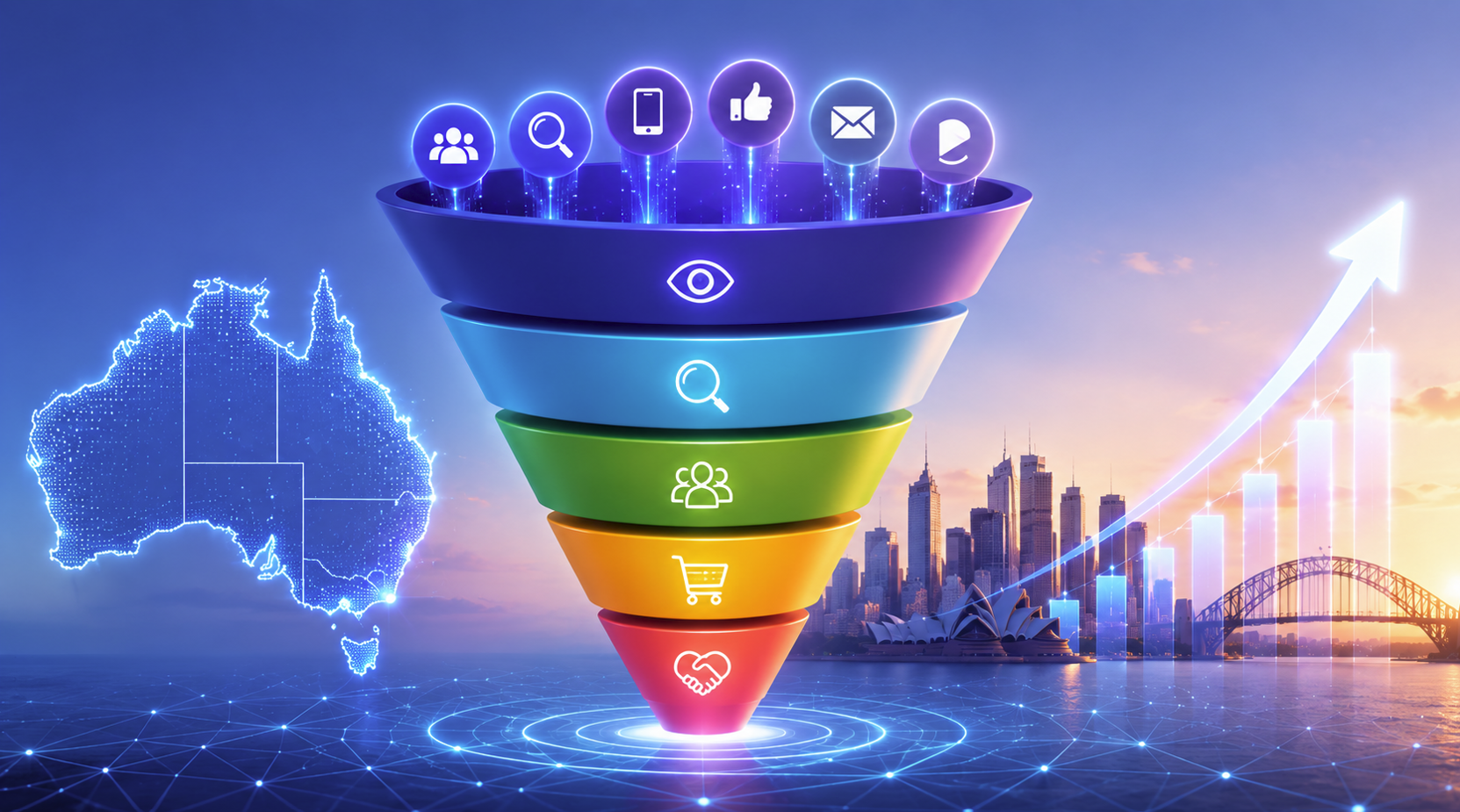
What Is a Full-Funnel Marketing Strategy?

A full-funnel marketing strategy runs with a steady creation of content and campaigns to target each stage of the customer journey. Think of it as a holistic approach that not only focuses on conversion, but also helps your brand build visibility, engagement, trust and retention. 

Here’s how the funnel usually works:

Funnel Stage

Goal

Best Channels

Awareness

Get discovered

SEO + Social Media

Consideration

To build trust

SEO + Retargeting

Conversion

Generate leads/sales

Google Ads

Retention

Keep customers engaged

Social + Email

The significant shift in 2026 is that the likelihood of customers making a conversion after one interaction is rare, due to exposure to various platforms and devices. This is why your marketing needs to be integrated into today’s market.

The Role of SEO in a Full-Funnel Strategy

SEO is one of the most powerful long-term marketing channels for Australian businesses. However, the role of SEO has undergone a few changes, and right now, SEO isn’t determined by how high you rank on SERPs, but how well your brand is visible, trustworthy, and discoverable online.

SEO Builds Long-Term Visibility

SEO, by nature, is a process that takes time, unlike paid advertising.

That means if you optimise a blog or landing page well, it can:

  • Generate traffic for years
  • Build authority in your niche
  • Support every stage of the funnel


Due to this, SEO becomes one of the most cost-effective long-term investments in digital marketing.

SEO Builds Trust and Authority

Customers are likely to trust businesses that first take the time to educate them before selling to them.

This is why high-performing SEO content comes with:

  • Guides
  • Tutorials
  • FAQs
  • Industry insights
  • Case studies

 This is the type of content that locks down your users during the consideration stage.

SEO Now Supports AI Discovery Too

Search behaviour is taking a whole new AI-driven lead, due to:

  • Google AI Overviews
  • ChatGPT
  • Gemini
  • Perplexity

The upgrade in modern SEO is that it now needs support to help AI systems understand:

  • Your expertise
  • Your brand authority
  • Your topical relevance


And because of these factors:

  • Topical authority
  • Structured content
  • Entity signals

 Are becoming necessary for Australian SEO strategies.

The Role of Google Ads in a Full-Funnel Strategy

SEO is a patience game, but Google Ads brings you visibility on command. This is why SEO and PPC together are a power combo.

Google Ads Captures High-Intent Traffic

Google Ads work their magic at the bottom of the funnel when:

  • Users are already searching with intent
  • Users are ready to compare or purchase


For instance:

  • “best accountant Brisbane”
  • “emergency plumber Sydney”
  • “SEO agency Melbourne pricing”

These searches usually bring in quick conversions due to strong intent.

Retargeting Strengthens Funnel Performance

A lot of users don’t plan to convert on the first visit. This is why retargeting campaigns are important to bring them back by:

  • Reminding users about your brand
  • Reinforcing trust
  • Increasing familiarity over time

This is necessary in Australian markets where competition is intense, and customers are always cross-checking businesses before making decisions.

AI Automation Is Changing Google Ads

In 2026, Google Ads works alongside AI-driven systems like:

  • performance Max campaigns
  • smart bidding
  • predictive targeting
  • AI-generated creative testing

While automation increases efficiency, it also comes with a couple of setbacks. Some of the mistakes businesses make by putting all their bucks on automation are:

  • Wasted ad spend
  • Bad audience quality
  • Weak messaging alignment

A strong campaign is a combination of AI-powered automation and human strategy oversight.

The Role of Social Media in a Full-Funnel Strategy

The time when social media was for brand awareness has ended; it now impacts almost every stage of the customer journey.

Social Media Builds Brand Awareness

Platforms such as:

  • Instagram
  • TikTok
  • LinkedIn
  • YouTube Shorts

are now discovery engines.

Everyone nowadays is discovering brands through:

  • Short-form videos
  • Creator content
  • Educational posts
  • Industry commentary

 Younger audiences are finding social search as common as Google search, and that says a lot for businesses.

Social Media Builds Trust Through Repetition

When on socials, people trust brands that step up consistently.

With users spending time on social media daily, social media has become a space for brands to create:

  • Familiarity
  • Consistency
  • Emotional connection

 With this repeated exposure comes higher conversions later down the funnel.

Social Platforms Are Becoming Search Engines

Social platforms are evolving fast as search engines, with users now directly searching on:

  • TikTok
  • Instagram
  • YouTube

And what they’re looking for are:

  • Tutorials
  • Reviews
  • Local businesses
  • Recommendations

 Now, social content is not just about engagement but a direct extension of discoverability.
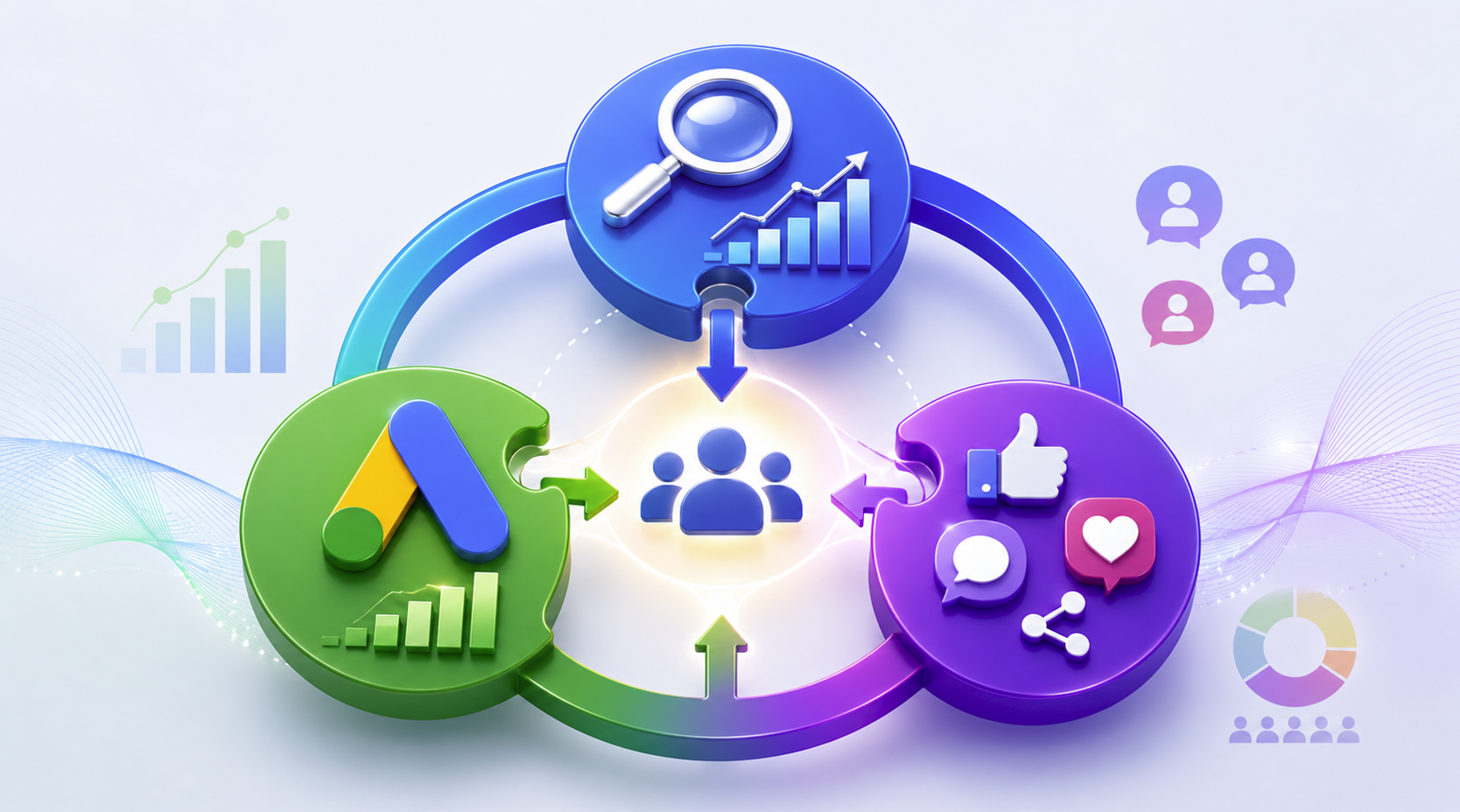
Why SEO, Google Ads, and Social Media Work Better TogetherWhy SEO, Google Ads, and Social Media Work Better Together

No two channels are alike, and they all come with their own strengths: 

Channel

Main Strength

SEO

Long-term authority

Google Ads

Fast conversions

Social Media

Attention + engagement

These channels are capable of performing on their own, but if you bring them together strategically, you have a marketing base that will generate solid results over time. 

For instance:

  • SEO content betters ad landing page quality
  • Social content increases branded searches 
  • Google Ads retarget social visitors 
  • SEO works on building trust after paid discovery 

Together, these channels create strong customer journeys and lower cost per acquisition.

Example of a Full-Funnel Marketing Strategy in Australia

Let’s take a Brisbane-based accounting firm. Here’s what a connected strategy looks like under a full-funnel marketing strategy:

Awareness Stage

The funnel begins with the business posting:

  • SEO blogs targeting tax-related search 
  • LinkedIn thought leadership posts
  • Instagram Reels explaining accounting tips

 By doing the above, you can build strong visibility across multiple search and social platforms.

Consideration Stage

Under the consideration stage, we want our users to engage, and if they do, they get:

  • Downloadable guides
  • Retargeting ads
  • Educational email sequences
  • Case studies and testimonials

 Your users’ trust in you starts to build here.

Conversion Stage

Google Ads target high-intent searches such as:

  • “small business accountant Brisbane”
  • “tax accountant near me”

 In this stage, users are very likely to lean towards a conversion because they already know the brand.

Retention Stage

The final stage comes post-conversion and here.”

  • Social media maintains engagement
  • Email marketing nurtures loyalty
  • Ongoing content reinforces authority

 This creates the pathway for retention and referrals.

Common Mistakes Australian Businesses Make

One of the main reasons that a lot of people struggle with their marketing these days is that they’re running marketing channels separately. When there’s no smooth integration or communication between channels, brands face issues such as:

  • Disconnected SEO teams from social teams
  • Running paid ads with weak landing pages
  • Posting on social randomly without a strategy
  • Lack of retargeting systems
  • Focusing only on short-term conversions


This internal division will eventually show up externally through fragmented customer experiences, which is why for today’s marketing to succeed,d integration is a must.

How AI Is Changing Full-Funnel Marketing

AI is changing how we approach digital marketing across all channels. The shift we’re seeing now includes:

  • AI-generated search summaries
  • AI-powered ad targeting
  • Predictive audience segmentation
  • AI-assisted content production


This doesn’t mean that AI is replacing strategies. Businesses in 2026 need to know how to use AI to:

  • Enhance efficiency
  • Automate repetitive tasks
  • Analyse customer behaviour


The goal is to use AI in perfect conhesion with human creativity, positioning, and decision-making.

What Australian Businesses Should Focus on in 2026

Here’s what today’s Australian businesses should focus on if they want to stay ahead of the curve in this digital marketing era:

Build Multi-Channel Visibility

Customers are constantly exposed to multiple platforms, which means your brand visibility should go beyond just Google.

Create Funnel-Based Content

Each stage of the funnel has a purpose of its own, which means you need to curate content to serve that purpose:

  • Awareness – educational/information content
  • Consideration – trust-building content
  • Conversion – service pages and offers
  • Retention – engagement content

Measure More Than Clicks

Metrics have increased over time. Today’s metrics you need to focus on are:

  • Engagement
  • Brand visibility
  • Assisted conversions
  • Audience quality

It’s not just about traffic anymore, but also the quality of your users’ interaction with your content.

Invest in Brand Authority

No matter how tactical or technical your marketing efforts are, if your brand isn’t telling the story it’s supposed to, then nothing works.

This is what it means to have brand authority, and authority comes from:

  • Consistency
  • Expertise
  • Social proof
  • Quality content

The Future of Full-Funnel Marketing in AustraliaThe Future of Full-Funnel Marketing in Australia

Under the general prediction, digital marketing in Australia will develop into a whole new game and become more integrated.

That future may be a place where:

  • Search and social overlap more
  • AI influences customer journeys early
  • Short-form content takes over attention
  • Brand trust is your primary ranking factor


Businesses that look at marketing as a connected ecosystem show promising growth in the long term over isolated channels.

Final Thoughts

Integration is not an option anymore in digital marketing, and that means everything you’ve known from SEO, Google Ads, and social media is no longer a separate marketing strategy.

In 2026, they perform best when they work together as part of a full-funnel system.

  • SEO works to build authority for your site
  • Google Ads captures intent
  • Social media creates interest, attention, and trust

Bring them together, and with a bit of patience, you will have a marketing engine that will bring you visibility, engagement, and conversions over time.

For Australian businesses making their way through this intense digital market, an integrated approach is what makes the difference between short-term traffic and sustainable growth.

If you read this blog and are considering App Development, We are leading Digital Marketing Agency in Brisbane and our Team are just a phone call away!

Let’s make your business stay ahead of the digital curve with a high-performing app that is ready to take on the future. How? Simply talk to us at Digital8 today or schedule a consultation, and we’ll make an app backed by proper experience and guidance.

Learn More: Digital Marketing Trends


Why Your Google Ads Are Getting Clicks but Not Conversions

Getting clicks on Google Ads is a good sign, and not to mention exciting – at first.

How can you not be?

  • Impressions are rising
  • Traffic is streaming in
  • Ads are being seen

But when you take a peek at your leads or sales and notice nothing’s really converting.

And this frustration is one of the most common among Australian businesses relying on PPC advertising in 2026. 

Because at the end of the day, clicks are an easy buy, but not conversions.

For your Google Ads to succeed today, it needs to depend on a lot more than just traffic, and that depends on:

  • Targeting the correct intent
  • Building trust
  • Creating solid landing pages
  • Understanding customer psychology
  • And interconnecting ads to the entire marketing funnel

If your Google Ads are only bringing in clicks but not conversions, then there’s an issue – we’ll show you how to find and fix it.The Real Problem Isn’t Clicks – It’s Conversion Quality

Metrics are important, but if all your business is worrying about is:

  • Clicks
  • Impressions
  • CTR (click-through rate)

Know that they do not guarantee your business revenue.

First, you need to understand that a click can mean anything:

  • Users who aren’t ready to buy
  • Users who don’t trust your business
  • Users who clicked accidentally
  • Simply curious users

Ever wondered why high traffic numbers still show bad ROI? This is why.

Out of these clicks, the real purpose of your Google Ads shouldn’t be traffic, but to bring in users who actually want to buy your product/service.

Why google ads champaigns fail to convert in 2026Why Google Ads Campaigns Fail to Convert in 2026

2026 PPC campaigns are facing a lot of problems due to:

Poor Keyword Intent

One of the mistakes that many make is going for keywords that bring in an attractive audience.

For example:

Weak Intent Keyword

Strong Intent Keyword

“How to fix plumbing.”

“emergency plumber sydney”

“SEO tips”

“SEO agency Brisbane.”

“best running shoes”

Buy running shoes Australia.”

Broad informational keywords usually generate clicks without any purchase intent.

In 2026, the focus should be on search intent rather than traffic volume.

 The more your keyword aligns with a buying decision, the better the conversion potential.

Weak Landing Pages

There are moments when your ads are perfect, but the real issue is your landing page.

Your user may click your site looking for:

  • Trust
  • Clarity
  • Answers
  • Simplicity

But instead they meet:

  • Cluttered pages
  • Slow websites
  • Generic messaging
  • Confusing layouts

This leads to a drop in conversions fast.

Some of the most common landing page problems you need to clear up are:

  • Slow loading speeds
  • Weak headlines
  • Unclear CTAs
  • Too much text
  • Poor mobile optimisation
  • Lack of trust signals

 With the increase in digital competitiveness in markets, your user won’t think twice about abandoning you if they don’t feel like you’re genuine.

Your Ads Attract Curiosity, Not Buyers

When your ads are created to maximise clicks instead of attracting qualified leads, it leads to an issue of high CTR, with low conversion quality.

For instance:

  • Exaggerated offers
  • Misleading headlines
  • Vague promises
  • Clickbait wording

 Will bring you traffic; however, these are not real customers. The purpose of your ad should be to filter out users,s not attract everyone.

An ad is deemed good if it can qualify a user before the click even happens.

You’re Targeting the Wrong Audience

Ad automation is becoming the norm for Google Ads through:

  • Smart targeting
  • Performance Max campaigns
  • AI audience expansion

It’s true automation increases the scale of targeting, but this can go out of hand and widen targeting a tad too intensely, leading to :

  • Unnecessary clicks
  • Low-quality leads
  • Wasted spend

The most common audience targeting problems are:

  • Bad geographic targeting, broad demographic settings
  • Weak audience segmentation
  • Irrelevant placements


Remember: more clicks don’t always point towards better traffic.

There’s No Trust or Social Proof

Today’s consumer is careful. This means users, especially in Australian service industries, look for trust signals before making a conversion.

If your landing page doesn’t have:

  • Testimonials
  • Reviews
  • Case studies
  • Guarantees
  • Trust badges
  • Clear contact information


Users will hesitate to convert.

This goes to prove that trust is a huge conversion factor in 2026, and that means no matter how strong your ad is, if trust signals are weak, you’re losing a customer.

Your Offer Isn’t Strong Enough

There can be instances where your ad campaign is error-free, but the issue lies in the fact that:

  • The offer feels bland or generic
  • Pricing isn’t clear
  • There’s no urgency
  • Competitors appear stronger

Users check and compare brands before making decisions, so if your value proposition isn’t worth consideration, clicks will fail to convertThe Hidden Problem With AI Automation in Google Ads

AI-driven campaigns are taking the lead in 2026, and Google is paving the path for it.

Some of the campaign types you need to know:

  • Smart bidding
  • Performance Max
  • Automated targeting
  • AI-generated ad creatives

While these tools make work easy, they also carry a bit of misconception:

Google’s AI is designed to maximise platform activity, not your profitability.

Automation usually focuses on:

  • Clicks
  • Engagement
  • Data collection

Over:

  • Lead quality
  • Sales quality
  • Long-term ROI

 When you fail to monitor campaigns properly, they can derail, resulting in poor-quality traffic in no time. This is where the touch of human strategy is still important.

Why landing pages matter more than ads.Why Landing Pages Matter More Than Ads

Where most businesses go wrong is spending time on improving ads while overlooking the state of the conversion environment.

Here’s what’s actually happening:

The landing page usually makes the call on whether the conversion happens.  

The difference:

Weak Landing Page

High-Converting Landing Page

Generic messaging

Clear value proposition

Slow loading

Fast mobile performance

Lack of trust signals

Reviews and testimonials

Too many distractions

Focused CTA

Cluttered design

Simple structure

With strong landing pages, you’re usually guided towards one specific action. This leads to a reduction in friction and an increase in trust.

The Most Common Google Ads Mistakes Australian Businesses Make

Almost every business nowadays at least dabbles with PPC campaigns, and they’re usually dealing with the same mistakes as everyone else.

Sending Traffic to the Homepage

Homepages are there to welcome your users, so they’re not the first choice to get your users to make a conversion.

A specific landing page dedicated to conversions only usually winds up performing better.

Using Broad Match Keywords Excessively

Go for negative keywords over broad match, as the latter is known to bring in irrelevant traffic unless you pay attention to it.

Ignoring Mobile Experience

Mobile usage is increasing by the day, which means your users are using mobiles more than desktops or other devices, which also means a good portion of your traffic comes from mobile devices.

Mobile responsive UX is a necessity, and poor mobile UX will snatch away your conversions faster than you think.

No Retargeting Strategy

The average customer will not convert on the first visit. Which is why you need to make use of retargeting to help visitors who’ve already shown interest re-engage and consider your product.

Weak Conversion Tracking

Tracking metrics correctly is an underrated skill, which is why metrics tracked incorrectly end up costing a lot. Because at the end of the day, you cannot optimise what you cannot measure properly.

How to Improve Google Ads Conversion Rates

A lot of conversion problems are fixable, so there’s no need to give up on your Google Ads:

Focus on High-Intent Keywords

When selecting keywords,s give priority to ones that suggest buying intent:

  • “hire”
  • “buy”
  • “near me”
  • “pricing”
  • “services”

The trick here is to replace high traffic with less traffic by using stronger intent because it performs better – we need small volumes of strong traffic, ic not large volumes of weak traffic.

Improve Landing Page Experience

Your landing page experience determines a lot, so make sure it:

  • Loads fast
  • Has strong headlines
  • Has clearer CTAs
  • Is mobile responsive
  • Has clearer layouts

 When your user sees the landing page in the first few seconds, your page should give them a reason to trust your business.

Add Strong Trust Signals

Trust signals are imperative. Your user requires enough information to want to stick around your site.

For this add:

  • Reviews
  • Testimonlials
  • Client logos
  • Guarantees
  • Awards or certifications

 Trust is a heavy influencer of conversion rates.

Use Retargeting Campaign

Ready-to-buy customers are very few in number, and most customers need a few too many reminders and reasons through multiple touchpoints before making a conversion.

This is how you make use of retargeting campaigns to keep your brand visible in the decision-making process.

Align Ads With Funnel Stages

Make sure the content you create for each stage matches the user.

For example:

  • Awareness campaigns are meant to educate
  • Consideration campaigns are focused on building trust
  • Conversion campaigns drive action

What you shouldn’t do is sell aggressively to a cold audience, as this most often results in failure.

Track Real Business Metrics

Metrics matter, so make sure your clicks have purpose, because without purpose, there’s no profitability to count for.

Prioritise:

  • CPA (cost per acquisition)
  • ROAS (return on ad spend)
  • Qualified leads
  • Actual sales outcomes

 These metrics deserve more priority over CTR.SEO, Social Media, and Google Ads Work Better Together

SEO, Social Media, and Google Ads Work Better Together

One of the main reasons ads fail to make conversions is that the brand lacks supporting visibility elsewhere.

Here’s how users usually interact with an ad:

  1. They first see your ad
  2. Then search for your brand after
  3. Check your social profiles
  4. Read reviews
  5. Compare competitors


For that to happen:

  • SEO first needs to build trust before the click
  • Social media creates a sense of familiarity
  • Google Ads capture intent

The most effective and powerful marketing strategy in this digital age is one that combines all 3.

Read more about building a full-funnel marketing approach here.

Why Conversion Optimisation Matters More Than Traffic in 2026

Google Ads prices are increasing in Australia, and wasting away clicks is a costly consequence no business wants. 

This is why you need to know how exactly PPC success functions in 2026 : 

It’s not about traffic volume, but about the quality of traffic, user trust, and conversion optimisation. 

The sensible approach right now is to improve your conversion rate instead of increasing ad spend recklessly.

Final Thoughts

In 2026, an issue in your Google Ads can be traced back to not one problem in the ad, but to an entire system holding it together.

This includes your:

  • Keyword intent
  • Landing page quality
  • Trust signals
  • Audience targeting
  • Funnel alignment

Today, the success of your PPC campaigns is not determined by vanity metrics such as clicks and impressions.

It’s about creating experiences that prioritise conversions, attract the right users, and guide them toward the right actions.

The ultimate goal with your PPC campaign is not to get more traffic, but to generate good business results.

If you read this blog and are considering App Development, We are leading Digital Marketing agency in Brisbane and our Team are just a phone call away!

Let’s make your business stay ahead of the digital curve with a high-performing app that is ready to take on the future. How? Simply talk to us at Digital8 today or schedule a consultation, and we’ll make an app backed by proper experience and guidance.

Learn More: Digital Marketing Trends


Why React Native is Gaining Momentum for Enterprise-Grade Apps

Introduction

In 2026, Australian businesses are facing a lot of pressure to produce high-quality mobile experiences on multiple platforms – all under budget and without going over timelines! The demand for scalable, cross-platform enterprise apps has recorded a staggering increase, from Brisbane startups to Sydney fintech firms and Melbourne enterprises. It’s about reaching the masses, and businesses are straightforward about wanting options that allow them to tap users on both iOS and Android devices, without lacking in performance maintenance, security, and reliability.

And so we give you React Native. Facebook introduced React Native, a cross-platform framework that allows developers to build apps for both iOS and Android with just one code base. This and many other promising features of React Native have made this framework a cost-efficient option, with a quick time-to-market, and maintainability for Australian businesses with zero compromises on user experience. 

Some of the benefits of React Native that stand out are its ability to enforce a streamlined development process with fewer duplicate jobs and guarantee functionality in multiple platforms. For innovation and competition-heavy markets such as in Sydney, Brisbane, and Melbourne, this app’s quick deployment and other factors give businesses an upper hand in the market. 

Apart from that, React Native is becoming popular in the developer community and ecosystem, and that means businesses can easily loop in talent, third-party libraries, and enforce best practices. React Native is not just a choice for SMEs and startups anymore, but for large-scale enterprises as well – and this shows how far React Native’s capabilities extend, from being able to handle complex workflows, integrate with backend systems, and follow regulations under privacy laws and accessibility standards. 

Keep reading this blog, and we’ll reveal everything about where React Native stands for Australian businesses in 2026, with a deep dive into its key benefits, challenges, and real-world cases that offer valuable tips on how any Australian business can make use of React Native for their next scalable and next-gen apps.

What is React NativeWhat is React Native?

Let’s start with the basics. 

So what exactly is React Native? In simple terms, it’s an open-source cross-platform mobile app development framework under Facebook. With the help of JavaScript and React, this framework allows developers to write a single codebase that can be launched on both iOS and Android platforms. One of the main attractions of this framework is its low cost and development time, whereas native app frameworks such as Swift or Kotlin require individual codebases, which means more time and costs.

When compared with conventional hybrid frameworks, React Native is known to have a few native components rather than just web views, which means apps perform and feel like an actual native application. This way, Australian businesses can offer high-performance, responsive, and visually pleasing apps that work for enterprise-level businesses, all under a very decent cost and at no expense to speed or user experience.

React Native is also backed by a large and active developer community, which significantly contributes to its libraries, tools, and best practices. And this right here is a golden pool of access for great developers for businesses in Brisbane, Sydney and Melbourne.

Since React Native comes with some native components, this brilliant feature allows businesses to indulge in device-specific features such as push notifications, camera, GPS, and payment gateways such as POLi or Afterpay. React Native’s flexibility makes this framework a popular option for enterprise-based apps in sectors such as finance, logistics, healthcare, and retail.

Bottomline? React Native is that allrounder framework which has the speed and efficiency of cross-platforms, and the performance and agility of native apps. And that’s a pretty good recipe for an app that delivers solutions that are cost-effective, scalable and easy to maintain for any Australian enterprise.

Key Benefits of React Native for Australian Enterprises

The main reason why Australian enterprises are taking up React Native is that it delivers an attractive, cost-efficient, scalable and fast app option. Put this altogether, and React Native also stands out in development efficiency. What contributes mostly to this low development cost and time is React Native’s single codebase, which allows businesses to deploy apps on both iOS and Android. This also makes this app perfect for businesses looking to launch apps fast, respond to dynamic marketing changes or release updates across multiple platforms at the same time.

The native elements of React Native offer stellar performance levels and a native-like user experience, which is a necessity for enterprise-level apps. These native components also offer responsive interfaces, silky animations, and quick load times. For Australiban businesses in fintech, ecommerce, and logistics, these features are important as they directly contribute to engagement and retention levels.

The other advantage lies in easy maintenance and scalability. Being able to update or fix bugs in one codebase for multiple platforms brings your ongoing development overheads down by numbers. And on top of that, React Native’s large developer ecosystem makes sure you can access all libraries, pre-built modules, and tools which help businesses speed up the development process without any compromises on quality.

Flexibility is another noteworthy advantage of React Native. It allows you to integrate specific native modules into features that vary from one device to another, such as GPS, camera, push notifications, or payment gateways such as POLi and Afterpay – this flexibility is a highly appreciated benefit when it comes to enterprise apps that work with advanced workflows.

Benefits-wise, it goes without saying that React Native has much to offer Australian enterprises, which makes it a strong, cost-effective, and scalable solution for app development.

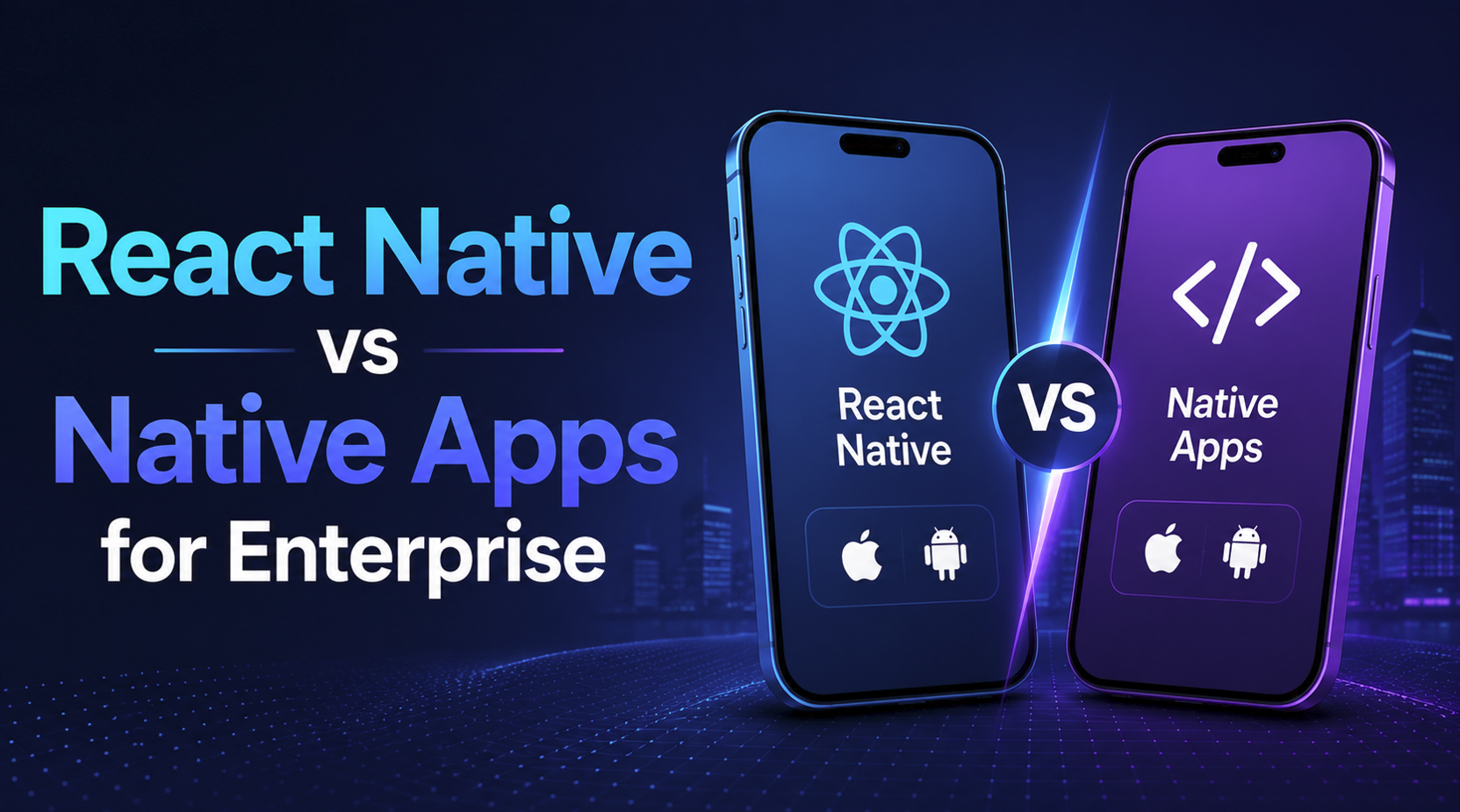
React Native vs Native Apps for Enterprise

React Native vs Native Apps for Enterprise

The first question that pops up when deciding to build an app is whether to go for cross-platform or native, and though React Native and native apps have benefits and challenges, it’s important to know which option works best for your business goals and aligns right with your performance requirements, budget, and other scalability needs. 

We’ll start with the basics.  Native apps are developed for one specific platform, where each platform must have a codebase on its own – for iOS, it’s Swift, and Kotlin or Java for Android. Native apps are known to flourish in terms of performance, have complete access to many device features, and come with tight security, which makes these apps perfect for complex calculations, sharp graphics, and high-volume transactions. For data-sensitive industries such as finance, healthcare, and logistics, native development adheres to strict regulations and promises smooth performance in the long run, across various devices.

However, React Native allows businesses to create cross-platform apps under a single codebase, which comparatively lowers the development time and costs over native apps. With React Native, your maintenance work is made easier, and it also comes with several native components which allow your app to enjoy near-native performance. React Native has proven to be a practical and results-driven option for a lot of Australian businesses, and this is because of the framework’s ability to offer a decent user experience, efficiency factors, and scalability needs for business apps that do not require extensive native features. 

Though native apps will be in demand for complex, high-performing, and security-sensitive apps, React Native has proven to be a great contender for large-scale business apps that favour time-to-market, cost efficiency, and long-term maintainability.

And with that, a lot of Australian businesses are easily adopting React Native for complex projects in modern times due to the framework’s attractive benefits, especially its flexibility, and the fact that it’s a solid next-gen solution for a business app that doesn’t compromise on usability or quality.

Real-World Australian Enterprise Use Cases

As mentioned, Australian businesses have begun to show an increasing interest in React Native apps – and we’re not talking bout just startups, but the big guns too. Let’s talk about a Sydney-based software company, Atlassian. With the help of Atlassian’s in-house CLI tool DevMate, this company optimised the React Native development process with code reuse and built acceleration.

Another similar case was discovered at Addaptor, which is a Western Australia-based software developer that worked on Agora Livestock – a React Native mobile app and website for the Australian goat, sheep, and cattle market. This app allows farmers, buyers and sellers to connect in the agricultural marketplace in regional and metro Australia. The app supports both iOS and Android using a single codebase, which reduces duplication and manages connectivity and device diversity issues.

These two cases are just a few of how React Native is actively helping enterprise-level apps in Australia. We’re talking about two vast industries here, from global Saas companies in Sydney to agriculture and logistics platforms in regional Australia. So if you didn’t believe before, here’s proof of what React Native can achieve in terms of performance, scalability and cost-efficiently if done right with the correct development team. And there you go, if your business is considering React Native or cross-platform app development, then take some inspiration from these real-world scenarios, which are already in action, right here in Australia.

Challenges & Considerations

Everything in life comes with cons, and while React Native has its own bright pros, you must be aware of its inevitable challenges and considerations to make informed decisions.

The main challenge that’s looking right at you is the limitation which comes in performance for advanced apps. The keyword with React Native apps is that it offers “near”-native performance. While it does so, apps that need intensive graphics, AR/VR capabilities, or even real-time analytics, need full native performance to function. The more complex the data and regulatory factors of an industry, the higher the need for native apps over React Native. Industries such as finance, logistics, or healthcare are a few to name some. 

The other consideration is your app’s need for native modules. If it’s planning to expand to advanced device-specific features such as camera functions, biometric authentication, or integrations with local payment gateways such as POLi or Afterpay, then a custom native code may be required. While React Native has sufficient native modules to offer near-native performance, it requires skilled developers to work the extra development time, which also comes with additional costs. 

Your next consideration would be regulatory requirements. In Australia, apps that deal with highly sensitive customer data must follow regulations under the Privacy Act 1988, and apart from that, a few other industry-specific standards, such as PCI DSS for payments or healthcare privacy standards. Making sure React Native apps cater to these requirements would mean your app has to run through extra rounds of testing, security audits, and some architectural planning with keen attention to detail.

And lastly, all businesses should pay considerable attention to long-term maintenance and developer availability. React Native indeed has a global skill pool, but finding developers for enterprise-level apps with cross-platform knowledge might be a bit of a challenging search in this competitive market of Brisbane, Sydney, or Melbourne.

Therefore, it’s critical that you, as a business owner, are aware of these challenges and considerations way before you start your app development journey. Once you have the right knowledge and know what to look out for and what to avoid, you’re confident enough to make decisions that don’t empty your bank accounts, are time-to-market, and peak in performance. No compromise on quality standards or compliance.

How Digital8 Helps Enterprises Build React Native Apps

If your enterprise is thinking of going React Native for cross-platform mobile development, then our development teams at Digital8 are here to offer your business a customised guide to bringing the ideal app to life. Here at Digital8, our app development teams have all the right skills and expertise to build you an enterprise-level app. From clear guidance on navigating issues and helping you make informed decisions, we’re here to get you a high-performing, secure app that steadily grows with your business.

For the first steps, we do a thorough consultation and strategy lay out, which involves us taking time to know your business goals, target audience, and relevant regulatory laws that need to be adhered to.  This way, we ensure that the React Native strategy we’re going for is the ideal match for your business’s operational needs, while it stays on track with Australia’s privacy laws, accessibility standards, and industry-focused regulations.

When it comes to development, we’re an agency that is a firm believer and practitioner of best practices in React Native architecture. This means, if and where needed, we integrate native modules for sophisticated features such as push notifications, biometric authentication, and payment gateways such as POLi or Afterpay. By using a single codebase for both iOS and Android, our teams at Digital8 aim to get you an enterprise-level app that’s made for this fast-paced market, with special focus on time-to-market,  and less development and maintenance costs in the long haul.

From sharp, eye-catching graphics, smooth UX/UI designs, testing rounds, quality checks, and even ongoing support and maintenance, way into post-launch – we at Digital8 have the whole process in order, so you can have the right app that’s ready to take on the future.

Digital8’s app development teams have worked with a portfolio of business apps, so trust us for a fully-functioning, adaptable React Native app that’s technologically superior as well as a booster for your customer engagement and operational efficiency.

So, what are you waiting for? Digital8 is ready to build your enterprise-grade React Native app, which will actually stand out in Australia’s competitive market.

Future of React Native in the Australian Enterprise Market

Based on current statistics, it is predicted that Australian businesses will show a significant adoption of React Native with time, due to the increasing demand for cost-effective, scalable, and high-performing mobile solutions. With the rapid spike of competition in the digital business world, the need for fast, convenient, and quality digital experiences has increased. This sort of demand makes cross-platforms like React Native a promising option for businesses.

Businesses in Australia are showing deep interest in some emerging trends such as artificial intelligence (AI), machine learning (ML), and the Internet of Things (IoT). React Native stays in demand as the framework that can support a lot of these emerging technologies under one codebase.

It’s important to note that one of the reasons React Native is thriving is due to its growing developer community and vast library ecosystem.

And as mentioned before, the talent pool for React Native developers in Australia is growing with new developers joining in by the day, and that means more developers for Australian businesses. With the help of this growing talent pool in big business hub cities, there arise the possibility of cross-border collaboration arises, which makes it a lot easier for businesses to create stronger, complex apps that can have reliable support in the long run.

And as always, last but not least, compliance and security measures will still remain a necessity with time. All business apps must remember to stick to the laws of the Privacy Act 1988, accessibility standards and relevant industry-specific regulations.

The agile nature of React Native makes it easier for developers to weave in these security protocols without undermining the efficiency levels of cross-platform development.

What you need to know simply is that the future looks promising for React Native, as it is currently considered a strategic choice for Australian businesses. If your business app is for the future and looking for great performance, cost-efficiency and scalability, then React Native is the future of transformative digital businesses.

Conclusion

React Native has become quite the catch for Australian businesses across Brisbane, Sydney, Melbourne and beyond due to its attractive positioning in the market as a practical and strong solution for enterprise-grade app development in Australia. As mentioned in our real-world case studies, Australian businesses like SaaS moguls like Atlassian, to regional agricultural platforms like Agora Livestock, have identified the benefits and outstanding features of React Native that have improved app development processes in terms of development time, costs, scalability, and sustainability.

React Native does have its challenges, especially performance-wise for high-end applications, which also need more security measures and more native modules. However, these are not detrimental enough to completely abandon the framework. So how can we work around them? The key is to plan out your development processes with the correct app development teams and grounded business-level architecture. When that is finalised, it’s easy to see how the benefits of React Native far exceed the cons.

For most Australian businesses looking to explore cross-platform development, React Native stands tall as an agile, scalable, and robust framework solution that supports and adapts to innovation, emerging trends, operational efficiency, and long-term growth.

Teaming up with qualified and experienced developers like our app development teams at Digital8 can help your business make the right calls when navigating challenges in putting together an enterprise-level app. All it takes is the guidance of a qualified app development team to build you a business app that is safe, compliant, and able to adapt to the dynamic digital needs of this modern world.

And finally, it has become quite obvious by now that a lot of Australian businesses are strategically heading for React Native to build secure apps that generate positive user engagement results, and also stay strongly rooted in this heavily competitive digital market.

If you read this blog and are considering App Development, We are leading Web Development agency in Brisbane and our Team are just a phone call away!

Let’s make your business stay ahead of the digital curve with a high-performing app that is ready to take on the future. How? Simply talk to us at Digital8 today or schedule a consultation, and we’ll make an app backed by proper experience and guidance.

Learn More: App Development Trends


FAQs

Yes! Read our real-life case studies in this very blog, which features companies like Atlassian and Agora Livestock, which have used React Native for advanced applications and have been successful with results like steady performance and scalability.

A react native app’s cost depends on the app’s level of complexity, features, and integrations. If we’re looking at a basic enterprise app, it may start at AUD 50,000, but a complex app with increased functionality may go beyond AUD 150,000. A good app development team with solid, in-depth knowledge of costing can help you lay out an accurate budget for your app.

Yes, of course. Any Australian React Native app can be designed to comply with laws such as the Privacy Act 1988, other regulations such as accessibility guidelines (WCAG 2.1), and industry-specific regulations such as PCI DSS for payments.

For a lot of enterprise businesses, React Native is known to provide near-native performance. With the integration of native modules, app requirements such as high-performance, graphic-intensity, and device-specific features can still work in a React Native framework.

Maintenance work is much lesser in React Native over native apps due to the single codebase writing that is used for both iOS and Android. This makes the rollout of updates, upcoming features, and bug fixes less costly work compared to native apps, which require separate maintenance for each platform.

SEO vs GEO vs AEO: What’s the Difference and Which One Matters Most?

The world of AI search has had a recent spike, so you must have heard of a few buzzwords:

  • SEO
  • GEO
  • AEO
  • LLM SEO
  • AI search optimisation

Sounds like a lot? Well, your Australian business isn’t the only one trying to catch up with this new language taking over digital marketing in 2026.

But though complicated this terminology, the concept is actually not that bad:

Search is simply transitioning from links to answers

That means your business needs to know the exact difference between:

  • GEO (Generative Engine Optimisation)
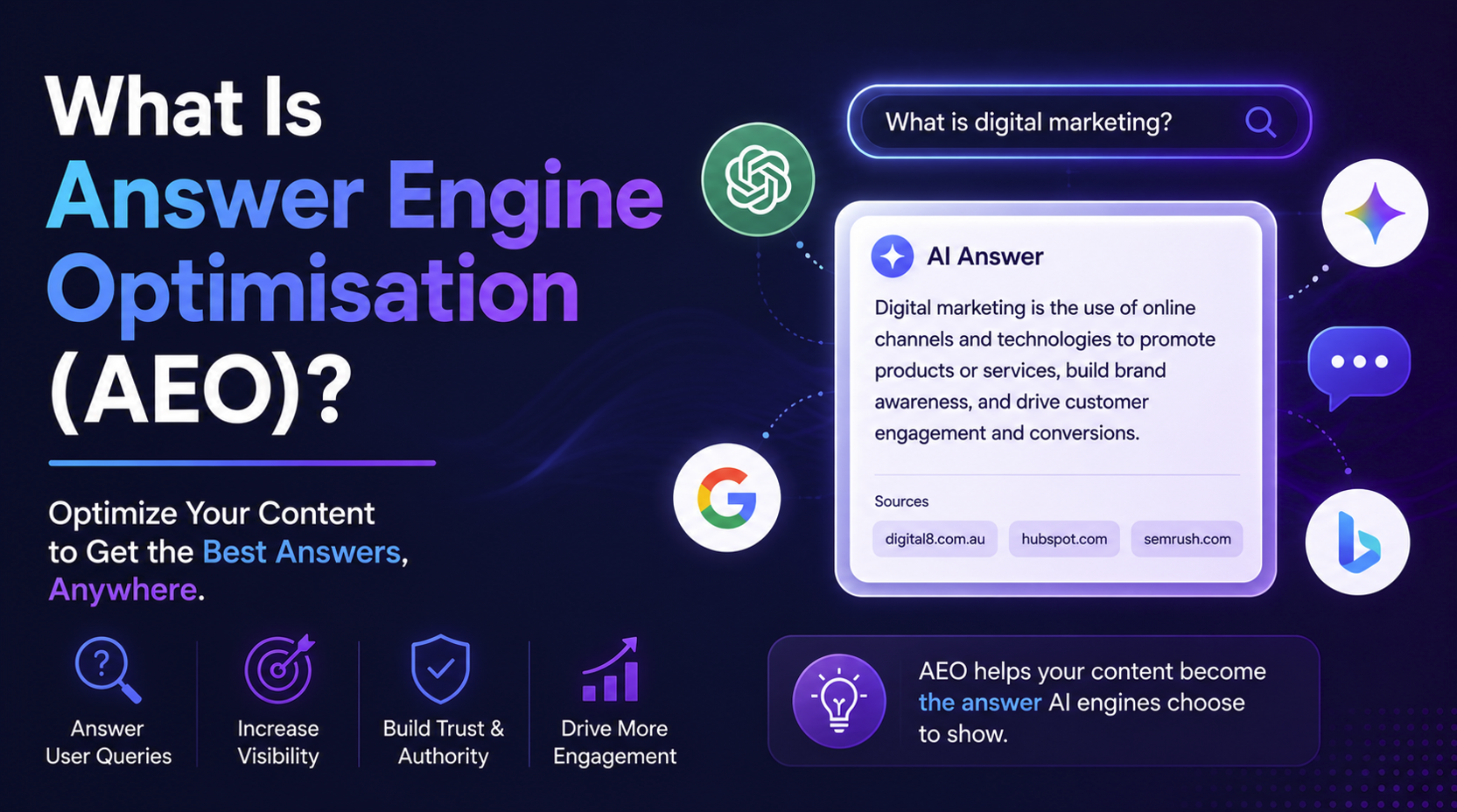
  • AEO (Answer Engine Optimisation)

In 2026, visibility is about giving your customer a straight answer rather than ranking on Google – for that, your online presence needs to be trusted and chosen by AI systems.

Let’s get to how it all works.

Why Everyone Is Suddenly Talking About GEO and AEO

It all started with the rise of a few tools that we can’t seem to avoid:

  • ChatGPT
  • Google AI Overviews
  • Gemini
  • Perplexity

No more browsing through a handful of websites, when users are leaning towards asking straightforward questions that get them quick AI-generated answers.

For instance, instead of searching:

  • “best accounting software Australia”

Users now prefer to ask:

  • “What’s the best accounting software for small Australian businesses?”


Once asked, AI systems will summarise recommendations from various sources across the website. This transition is why it’s crucial for every business to hop on GEO and AEO right now.

What Does Traditional SEO Mean Now?

SEO still functions as the backbone of online search, which is to improve a website’s visibility in search engine results. While change is happening, traditional SEO still has its focus set on:

  • Keywords
  • Backlinks
  • Technical SEO
  • Content optimisation


The goal has always been straightforward, which is to:

  • Rank high
  • Increase traffic volume
  • Generate clicks and conversions


SEO has been the base of online visibility for a while, and no one is here to replace that, regardless of the AI wave. Whatever you’re doing with your SEO, maintain it in 2026.

What SEO Focuses On

Your traditional SEO focuses on search rankings, organic website traffic, and click-through rates.

These features help search engines understand:

  • The nature of your content
  • Its relevancy
  • And whether it should be visible


This goes to show that you cannot face AI search without a solid SEO foundation, because to be indexed and discovered is still as important as before.

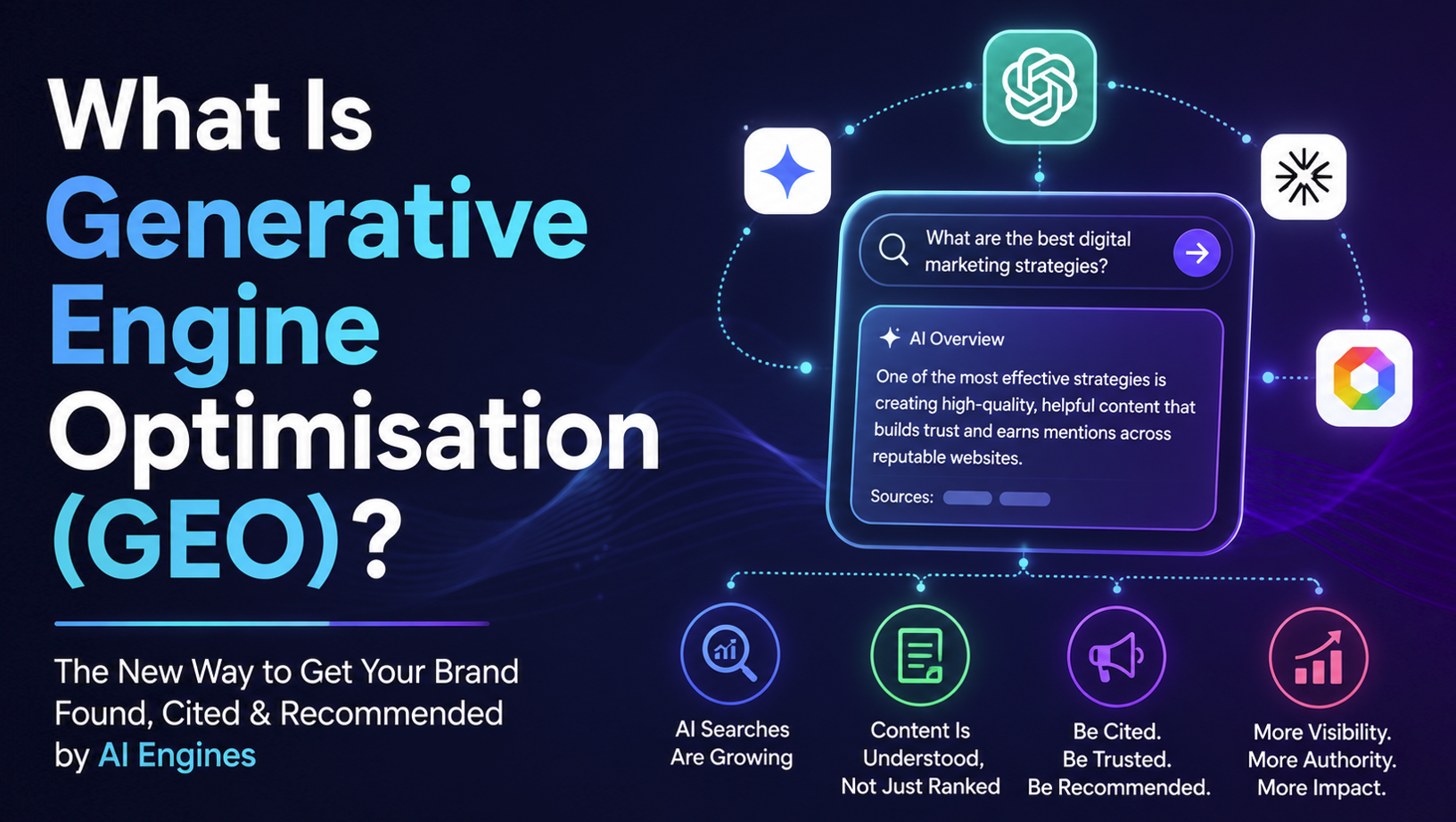
What Is Generative Engine Optimisation (GEO)?

What is Generative Engine Optimisation (GEO)

Generative Engine Optimisation is optimising your content so that AI systems can use and cite your content in AI-generated responses.

With GEO its not only about optimising for search rankings, but also for:

  • AI visibility
  • AI-generated summaries
  • Conversational search results

To simplify:

  • SEO helps users find content
  • GEO helps AI systems use your content for AI-generated citations and answers

What GEO Focuses On

GEO mainly focuses on:

  • Organised information
  • Clear formatting
  • Topical authority
  • Trust and credibility

AI systems prefer content that is:

  • Easy to read and summarise
  • Factually accurate and clear
  • Well-structured

This is why GEO has a heavy emphasis on content structure as much as SEO does on keywords.

What Is Answer Engine Optimisation (AEO)?

What is Answer Engine Optimisation (AEO)

AEO (Answer Engine Optimisation) is when you optimise your content to directly answer user queries.

AEO is mostly associated with:

  • Featured snippets
  • Voice search
  • FAQ optimisation
  • Conversational queries

AEO is structured to respond to the natural questions people ask online. It’s drawn to conversational queries.

Example:

  • “What is GEO?”
  • “How does AI search affect SEO?”


These queries work instead of short keyword phrases.

What AEO Focuses On

AEO works to improve:

  • Direct answer visibility
  • Snippet optimisation
  • Question-based search relevance 

This usually means your content has to include:

  • FAQ sections
  • Clear definitions
  • Short answer-first formatting


AEO works so that both search engines and AI assistants can easily understand and pick up your content.

SEO vs GEO vs AEO: What’s the Actual Difference?

Let’s make it simple for you:

SEO

GEO

AEO

Prioritises ranking

Prioritises AI citations

Prioritises direct answers

Optimises for search engines

Optimises for AI systems

Optimises for user questions

Keyword focused

Context and authority focused

Focuses on conversational intent

Measures traffic

Measures AI visibility

Measure answer visibility

Though each strategy comes with its own agenda, remember that they’re all working together towards the same goal: to make your brand discoverable online.

Which Strategy Matters Most in 2026?

If we’re keeping it straight, the best answer we can give is that all three of them are necessary.

But their necessity matters in different ways.

SEO Is Still the Foundation

Technical SEO still takes the lead in discoverability, because without

  • Crawlable pages
  • Quick loading pages
  • Well-structured sites

Your content will be hard for search engines and AI systems to find.

SEO is still king, but now GEO and AEO also sit at the same table.

GEO Is Becoming Essential

With the growth of AI-generated search, visibility is moving from:

  • Links to summaries
  • Rankings to citations

Businesses are now on a desperate lookout for content that AI systems can easily:

  • Understand
  • Trust
  • Reuse

And so begins a digital age where Generative Engine Optimisation is becoming a serious necessity in search optimisation strategies in Australia.

AEO Bridges Both Worlds

With AEO business optimise their content for:

  • Human queries
  • Voice search
  • AI-generated responses
  • Featured snippets

AEO will improve overall content usability on both traditional and AI-powered search experiences.

How Australian Businesses Should Approach SEO, GEO, and AEO

The way to go about picking the smartest approach is not picking separate strategies, but the one that you can combine the best.

Keep Strong SEO Foundations

Don’t forget your SEO roots, because your business will still require:

  • Technical SEO
  • Mobile optimisation
  • Site speed improvements
  • Internal linking

These necessities will always remain important.

Create AI-Friendly Content

Your content needs to be AI-friendly, so make sure they are: 

  • Structured
  • Easy to read
  • Conversational
  • Answer-focused

Build Topical Authority

In 2026, we’re choosing a web of informative content over a fluff blog.

Structure your copy with pillar pages, topic clusters, and internal linking.

Broader and deeper content gets prioritised by AI systems.

Optimise for Questions and Answers

Conversational content is gaining the upper hand in this answer economy, so tweak your content with the use of:

  • FAQ sections
  • Question-based headings
  • Direct definitions

Format your content in this manner, and watch how AEO and AI search visibility improves. 

Strengthen Brand Trust Signals

AI systems don’t just scan your website, but your brand presence across the entire web. This means reviews, community discussions, web mentions, consistent branding, and qualified authors are all considered.

Strong authority signals are a good indicator of peak SEO and GEO performance.

Common Mistakes Businesses Are Making

It’s easy to get carried away and make mistakes when there’s an overload of AI search dos and don’ts online.

Let us list down only what you need to know:

  • Don’t treat GEO as a substitute for SEO
  • Do not publish AI-generated content with poor quality
  • Do not ignore readability and structure
  • Do not chase after ranks without building authority

The businesses that are doing it right are the ones that have a seamless combo between technical SEO, strategic content, and AI-friendly formatting.

Why AI Search Optimisation Matters in Australia

Why AI Search Optimisation metters in Australia

AI-assisted search adoption is growing at a rapid pace throughout Australia. But at the same time, me a lot of businesses are also new to this and getting to know the strategies.

Which creates a good opportunity for businesses investing in:

  • AI search optimisation in Australia
  • GEO strategies
  • Answer-focused content

Do this right, and you can reach the standard level of visibility before the market becomes saturated.

The Future of Search Is Hybrid

While the buzz of AI is loud, in a practical sense, AI search is not about to take over everything overnight. We’re on track, but there’s definitely a long way to go.

So the future might have a combination of:

  • Traditional SEO
  • AI-generated search
  • Conversational assistants
  • Direct-answer systems

For your business, strong visibility depends on your ability to:

  • Build authority
  • Create meaningful and structured content
  • Answer questions directly
  • Optimise for both humans and AI systems

Final Thoughts

ChatGPT doesn’t get to select businesses the way marketers used to think about rankings.

What it does is show what the internet usually speaks of your brand. This is a whole new perspective on how online visibility is determined. It’s not about being “optimised for keywords”, but more about being”

  • Seen
  • Mentioned
  • Trusted
  • Contextually relevant

AI search is not going to rank your brand, but interpret, and interpret it well.

The businesses that understand that distinction now have the opportunity to build powerful entity signals, steady brand mentions, and topical authority, which are signals AI systems are looking for.

In 2026, online visibility isn’t about being found, but being the chosen answer itself.

If you read this blog and are considering Digital Marketing, We are leading Digital marketing agency in Brisbane and our Team are just a phone call away!

Let’s make your business stay ahead of the digital curve with a high-performing app that is ready to take on the future. How? Simply talk to us at Digital8 today or schedule a consultation, and we’ll make an app backed by proper experience and guidance.

Learn More: Digital Marketing Trends


Can ChatGPT Recommend Your Business? How AI Tools Choose Brands to Mention

Yes, these AI tools from ChatGPT, to Gemini and Google AI Overviews that are catering to your day-to-day queries can actually recommend your brand, BUT not the way you think.

AI search functions on a different spectrum from traditional search engines. They do not work to “promote” brands like ads, and they definitely don’t have favourites. Instead, they generate responses based on the trust, authority and visibility your brand has nurtured across the internet.

So yes, your business can be recommended by AI systems, but only if they can understand who you are, what you do, and whether others can trust you.

This is how your business can gain an upper hand in AI search optimisation in Australia, and get your brand to show up in AI-generated results.

How AI Search Is Changing Brand Discovery

Traditional search had it easy. All you had to do was type a keyword, get a list of suggested websites, and then click whichever site that fits your needs.

But when it comes to AI search, the game changes a lot. Now we have tools like ChatGPT, Gemini, Perplexity and Google AI Overviews that don’t give you links but direct answers and recommendations.

Now we have users discovering your website through a response saying:

‘’Here are some of the best laptops for university…”

And your brand will either show up in that response or not at all.

That’s the shift taking over visibility in 2026.

Can ChatGPT Actually Recommend Businesses?

Yes, it can, but not in the way digital marketing works. ChatGPT doesn’t have an intention to run ads or promote a brand; it simply generates responses based on:

  • Patterns in training data
  • Information on your brand is available across the web
  • Frequency of brand mentions
  • Contextual relevance

So by recommending a business, what the AI systems are actually doing is showing the most frequently mentioned and trusted brand online.

That’s a huge jump from being chosen to being recognised.

How AI Tools Choose Which Brands to Mention

To know how your brand appears in AI-generated answers, you first need to know what AI systems are actually looking for.

They have a few core signals in mind, and here they are:

Entity Recognition (Who You Are)

AI systems recognise entities, and an entity is your brand as a concept.

An AI system will recognise your brand as an entity through”:

  • Your business name
  • Your services
  • Your industry position

The more consistently your brand is mentioned online in an organised manner, the more likely AI systems will begin to understand:

“This is a real, established business in this space.”

Without establishing that level of clarity its hard for your brand to show up in AI search.

Frequency of Mentions Across the Web

How often your brand is mentioned is one of the strongest signals in AI search. This is not only on your website, but also across your:

  • Blogs
  • News articles
  • Forums like Reddit
  • Reviews
  • Social media

The more your brand shows online, the more “real” it becomes to AI systems. This is why brand mentions are as important as backlinks.  

Contextual Relevance

Brand mentions must come with context; if not, AI systems are not going to prioritise your brand. 

Their evaluation analyses:

  • What topics is your brand associated with
  • Whether mentions are positive or neutral
  • Whether your brand shows up in relevant industry discussions

For instance:


More context means more authority.

Authority Signals (E-E-A-T)

AI systems depend heavily on trust signals, a lot similar to Google’s E-E-A-T framework:

  • Experience
  • Expertise
  • Authoritativeness
  • Trustworthiness

They prioritise:

  • Credible authorship
  • Industry recognition
  • Consistent expertise signals


The less authority signals your brand is giving out, the less likely they are to be recommended.

Cross-Platform Consistency

AI systems evaluate your brand not just on your website, but through every platform and source online.

They need to see if your brand is consistent from website to social media presence, business directories, and external content mentions. 

Consistency = clarity = recommendations.

Why Some Businesses Appear in AI Answers (and Others Don’t)

You’ve probably wondered how some businesses appear in AI answers, and others don’t – the main difference here is a difference of AI visibility that comes down to:

  • One has strong online mentions throughout multiple platforms
  • The other only exists on its own website

AI systems usually go for brands that are:

  • Referenced widely
  • Described consistently
  • Reinforced contextually

In brief, AI recommends what the internet usually agrees on collectively.

Key Signals That Influence AI Search Visibility

To get your business to appear in AI-generated recommendations, tick off these signals: 

Brand Mentions (Linked + Unlinked)

Missing backlinks? No worries, brand mentions can help your AI understand:

  • Relevance
  • Reputation
  • Industry presence 

Unlike before, you do not have to completely rely on links, as an unlinked mention will still support authority building.

Topical Authority

AI systems prioritise brands that show deep knowledge in the areas they’re specialised in.

This means you need to build topical authority on your website with:

  • A portfolio of blogs on the same topic
  • Consistent niche focus
  • Strong internal linking structure

This is where you strategically make the most of LLM SEO and GEO strategies.

Structured Content

AI systems usually go for content that :

  • Have a clear structure; it doesn’t take much time to extract
  • And are answer-focused

This means your content needs to look presentable for AI systems with:

  • Headings
  • FAQs
  • Bullet points
  • Schema markup

External Authority Signals

External validation is a crucial factor for AI systems. You need to get the word of your brand out there through:

  • Digital PR coverage
  • Industry mentions
  • Customer reviews
  • Forum discussions

External authority signals are proof that your brand is known through the online space,e apart from just your website.

Content Clarity

AI systems don’t guess, they evaluate clear, straightforward content and then and only then do they make the choice to extract it.

If your content ticks off the following boxes, it’s ready for AI to reuse and recommend:

  • Clear
  • Direct
  • Well-organised

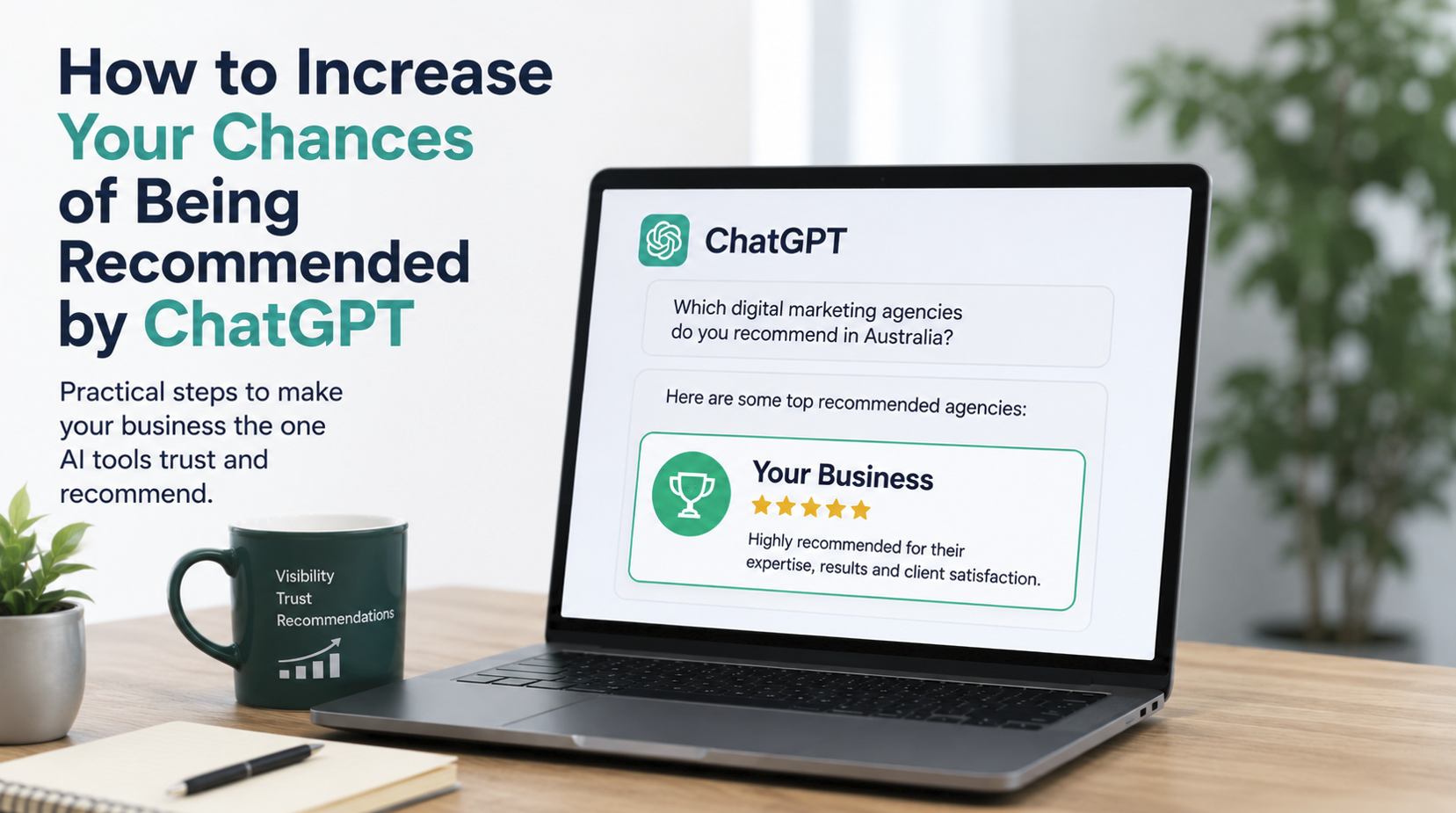
How to Increase Your Chances of Being Recommended by ChatGPT

How to increate your chances of being recommended by ChatGPTIf you’re after visibility in AI search, the best move is to change your view from keyword SEO to entity and authority building.
Here’s how you do it:

Build Brand Mentions Across the Web

The key is to get your brand out into online spaces as much as possible, but with context. Some of the places you can get your brand mentioned are in guest articles, news publications, online communities and industry blogs.

Online mentions throughout the web show that your website is recognised and trusted.

Invest in AI Search Optimisation Australia Strategies

Modern SEO has come a long way, and is now a combination of:

  • Generative Engine Optimisation (GEO)
  • LLM SEO
  • Entity SEO

By optimising your content under these strategies, you make your content and brand understandable for AI systems.

Create Answer-Focused Content

We’re in an “answer economy, ” which means the goal isn’t to write keyword-heavy blogs, but to build your content around:

  • Questions
  • Straightforward answers
  • Clear explanations

 Answer-focused content supports both SEO and AI extraction.

Build Topical Authority

AI systems are prioritising brands that know they’re specialised in the product/service that they’re selling, not generalised.

This means your content should:

  • Focus on a niche
  • Be built on clusters
  • Go deep, not broad

Maintain Strong Brand Consistency

From brand name to description and messaging, your brand should be consistent. A consistent brand means a brand trusted by AI systems.

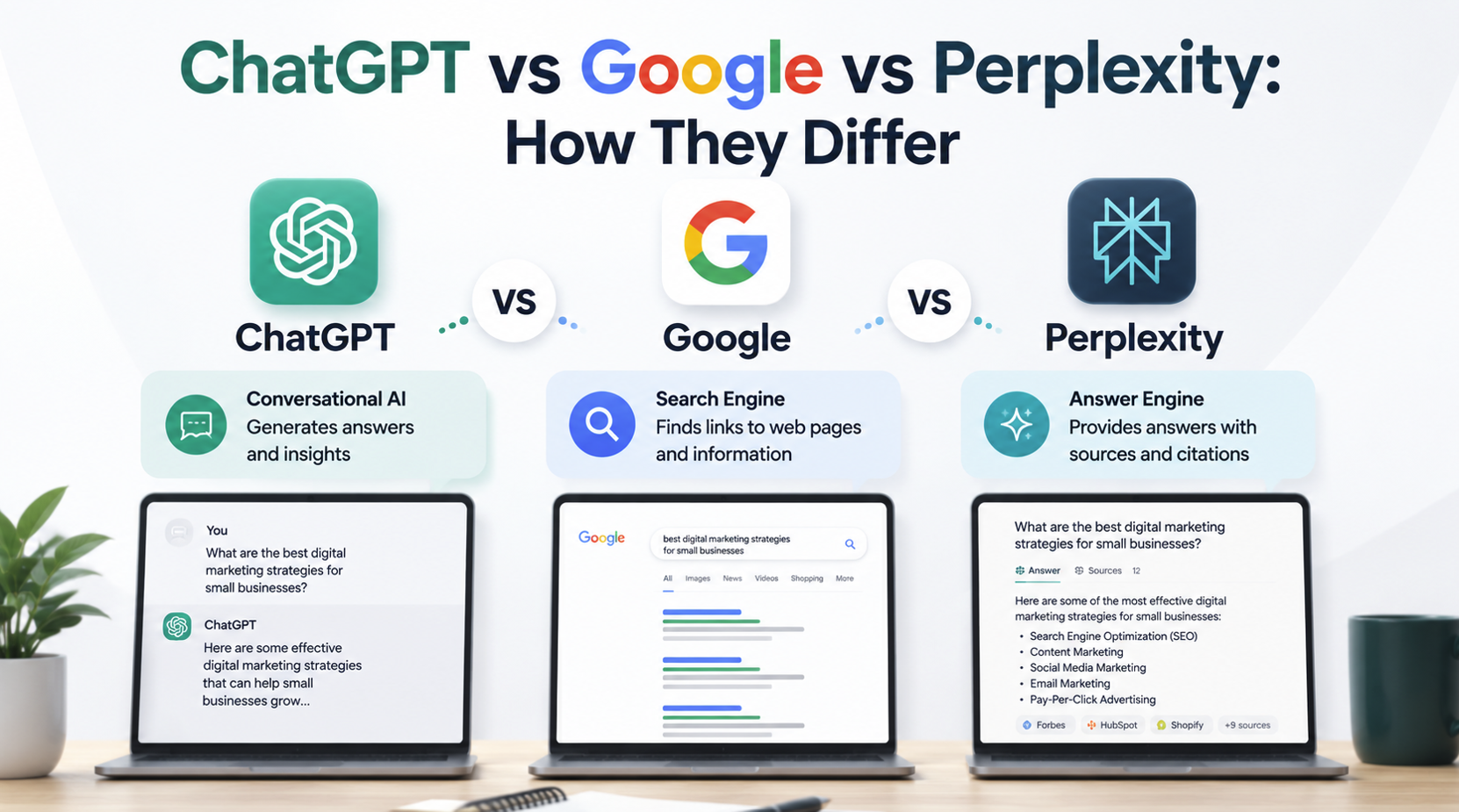
ChatGPT vs Google vs Perplexity: How They Differ

ChatGPT vs Google vs PerplexityEvery AI system has unique signals of its own, defining its behavioural pattern.
ChatGPT

  • Functions based on training patterns and web context
  • Heavy emphasis on repetition and familiarity

Google AI Overviews

  • Google AI Overviews is a combination of SEO rankings and entity understanding.
  • Involves a heavy use of trusted sources

Perplexity AI

  • Heavily based on citations
  • Prioritises clean references and authoritative content

Final Thoughts

ChatGPT doesn’t get to select businesses the way marketers used to think about rankings.

What it does is show what the internet usually speaks of your brand. This is a whole new perspective on how online visibility is determined. It’s not about being “optimised for keywords”, but more about being”

  • Seen
  • Mentioned
  • Trusted
  • Contextually relevant

AI search is not going to rank your brand, but interpret, and interpret it well.

The businesses that understand that distinction now have the opportunity to build powerful entity signals, steady brand mentions, and topical authority, which are signals AI systems are looking for.

In 2026, online visibility isn’t about being found, but being the chosen answer itself.

If you read this blog and are considering App Development, We are leading Web Development agency in Brisbane and our Team are just a phone call away!

Let’s make your business stay ahead of the digital curve with a high-performing app that is ready to take on the future. How? Simply talk to us at Digital8 today or schedule a consultation, and we’ll make an app backed by proper experience and guidance.

Learn More: Web Development Trends


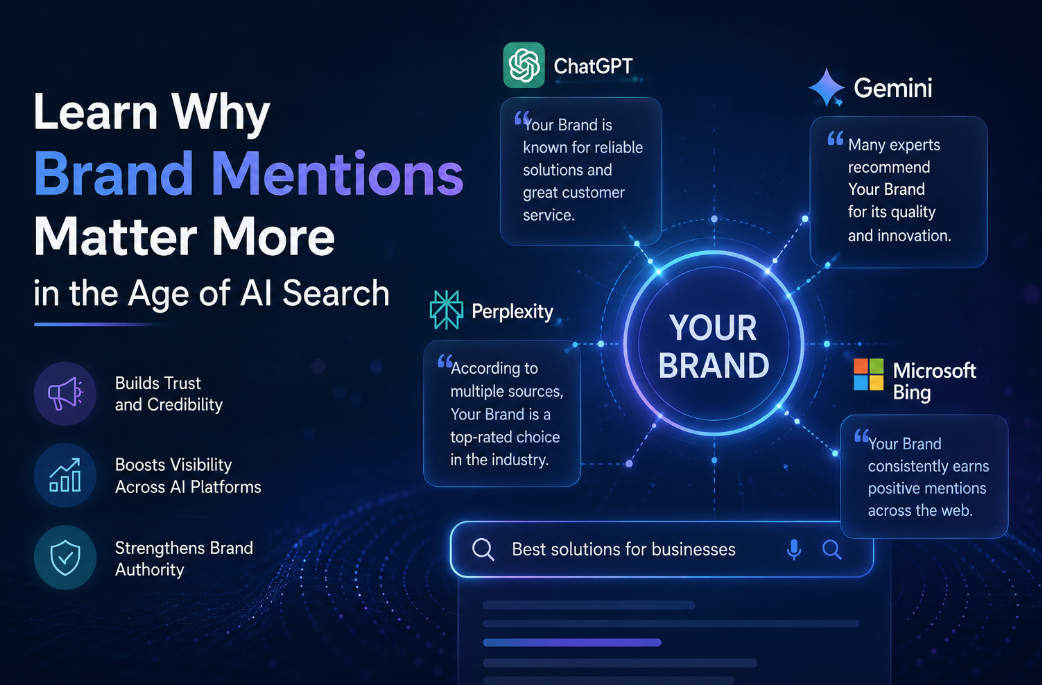
Learn Why Brand Mentions Matter More in the Age of AI Search

Search is going through a massive transition. 

We’re not reliant on just keywords, backlinks, and rankings as traditional SEO was. Times are shifting toward a heavy reliance on AI search tools such as ChatGPT, Gemini, Google Overviews, and Perplexity, and these systems are using a new approach to discover and recommend online brands to users. 

Within this change came the importance of brand mentions.

It’s not about links or rankings, but how often your brand is mentioned across the web, and mostly under what context.

Think about what the digital crowd thinks of your brand across the web.

Brand mentions are gaining traction so fast that it’s changing everything about visibility for Australian businesses focused on AI search optimisation.

Brand Mentions Matter More in the Age of AI SearchThe Shift From Keywords to Entities in Search
When keywords led SEO, a simple search of “best marketing software Australia” would lead search engines to suggest pages that include those words. 

However, AI search works differently. For AI search, the focus is on entities, not just keywords.

What is an entity?

An entity can be a:

  • Brand
  • Company
  • Person
  • Product
  • Concept

In this scenario, AI systems aren’t trying to match words, but to understand:

“What is this brand known for, and where is it mentioned across the web?”

And bam – now you cannot ignore brand mentions, because they have become core factors that interconnect your brand and authority.

What Are Brand Mentions in SEO?

Brand mentions refer to the act of mentioning your business/brand online within a specific digital space or platform.

Brand mentions can be found in the form of: 

  • Linked mention (that comes with a backlink)
  • Unlinked mentions (just your name)
  • Contextual mentions (your brand discussed in relation to a topic)

Example: 

  • A blog that mentions your agency in a list of SEO agencies
  • A Reddit discussion mentioning your product or service
  • A news article on your service 
  • A review site mentioning your brand

The best part about brand mentions? You don’t need a killer link to send out a powerful signal.

Why AI Search Relies on Brand Mentions

“Ranking pages” on Google belongs to traditional SEO, but with AI search, AI systems have their own way of ranking your site.

Here’s what AI systems do:

  • Extract information from various sources
  • Recognise authority and trust patterns
  • Build understanding of brands as entities

This is where brand mentions enter and take the role of a central ranking signal.

AI Uses Entity Recognition

Most AI tools, such as ChatGPT and Gemini, aren’t prioritising text, but entities.

What happens in entity recognition is that your brand becomes:

  • A concept in the AI’s knowledge system
  • A connected node in a wider information network

When your brand appears consistently across the web, the more powerful that entity becomes in the eyes of AI systems.

AI Builds Trust Through Frequency and Context

Brand mentioning doesn’t mean how often it is mentioned only, but also about where and how.

AI systems look into:

  • Whether your brand shows in credible sources
  • Whether mentions are positive, neutral, or negative
  • Whether your brand has topical consistency

Repetitive mentions build better trust than isolated backlinks.

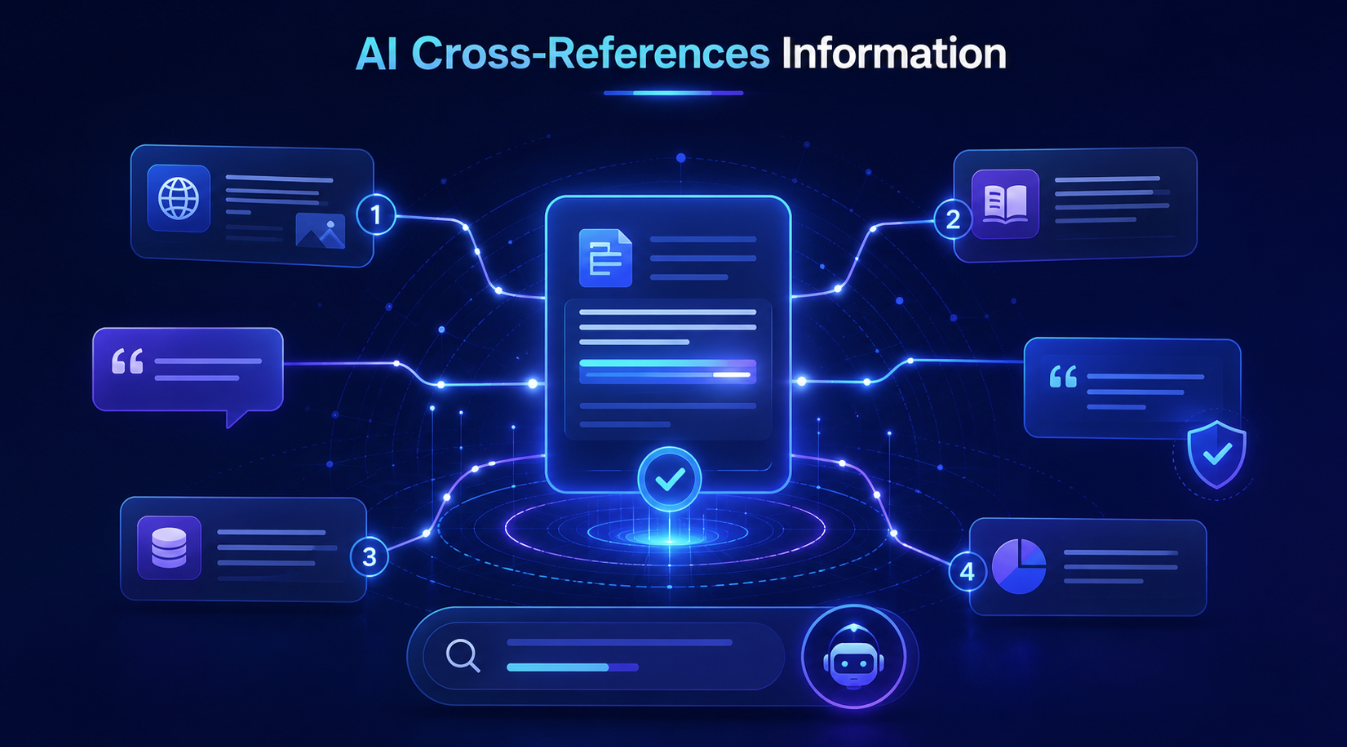
AI Cross-References Information

When compared to traditional search engines, AI tools gather information in combinations of:

  • News sites
  • Blogs
  • Reviews
  • Forums
  • Social platforms

If your brand consistently shows up in these platforms, then AI systems are likely to trust your brand and recommend it.


AI Cross-References InformationHow Brand Mentions Influence AI Search Visibility
Brand mentions have become a direct influencer of how AI tools respond to user queries. Here’s how:

ChatGPT and LLMs

Large language models are usually trained on heavy and large datasets that come with:

  • Articles
  • Public web content
  • Discussions and references

The more voices your brand is receiving online, the more likely it is:

  • gains recognition
  • is associated with your industry
  • included in responses  

Google AI Overviews

AI Overviews or Google’s AI-generated answers function based on:

  • Authority signals
  • Entity recognition
  • Existing SEO data meshed with brand trust

The stronger your brand presence, the higher the chance it could show up in AI summaries.

Perplexity AI

Perplexity is known to be citation-driven

It usually goes for sources:

  • Frequently referenced
  • Consistently mentioned across the web
  • Topically relevant

Brand mentions are the key that helps maintain that consistency.

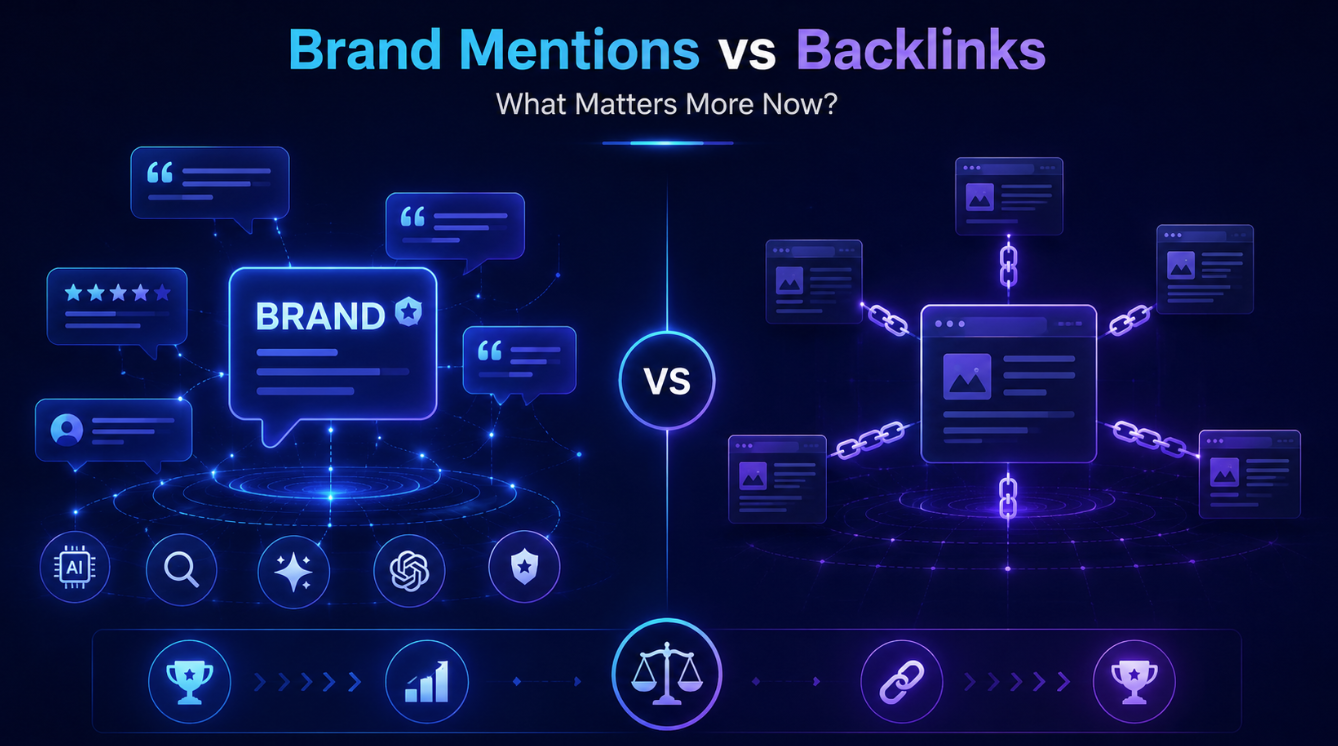
Brand Mentions vs Backlinks: What Matters More Now?

Backlinks are still part of the game, but the only shift is that they aren’t the only trust signal anymore.

Backlinks

Brand Mentions

Direct ranking signal

Entity authority signal

SEO-focused

AI + SEO hybrid signal

Requires hyperlink

Can be unlinked

Page-level authority

Brand-level authority

Brand mentions build something backlinks can’t, which is entity recognition.

Entity recognition helps AI systems understand your brand as an entity with authority.

Brand Mentions vs Backlinks What Matters More NowHow Brand Mentions Improve AI Search Optimisation in Australia

Australian businesses need to understand how brand mentions can act as a strategic addition to their AI search optimisation game.

Brand mentions will:

  • Improve a brand’s entity profile
  • Increase a brand’s chances of being cited in AI answers
  • Enhance topical authority in your relevant niche
  • Grow visibility beyond your website

Simply remember that the more your brand is talked about online, the more likely it is for AI to trust it.

Where Brand Mentions Come From

Brand mentions occur in multiple spaces across the web, not just one. You need to know every possible space you can get your brand name out in:

Digital PR

  • News articles
  • Industry publications
  • Guest features

Social Media

  • LinkedIn discussions
  • X mentions
  • Industry conversations

Reviews and Directories

  • Google Business Profile
  • Trustpilot
  • Industry listings

Forums and Communities

  • Reddit
  • Niche forums
  • Q&A platforms


These spaces carry a lot of potential to get your brand out, and are also spaces that are frequently scanned by AI systems, as it helps them understand real human sentiment.

How to Increase Brand Mentions for AI Search

With all the attention brand mentions are getting, it’s no secret that businesses are trying to figure out how to build them in an effective manner. 

Let’s show you how: 

Invest in Digital PR

Digital PR is where your brand in 2026 has any chance of getting a worthy audience. For this, you need to get your brand up in: 

  • Industry blogs
  • News outlets
  • Expert roundups

The best way to gain authority across trusted sources is through a solid digital PR plan. 

Create Shareable, Insightful Content

Naturally, shared or cited content usually receives more mentions. For this, make sure your content covers the following:

  • Industry insights
  • Data-driven posts
  • Opinion-led content

Build Strong Entity Signals

The more your brand is mentioned, the stronger your entity signals – and likely it is that AI systems will identify your brand across a sea of online competition.

For strong entity signals, make sure you are: 

  • Consistent with brand mentioning 
  • Clear organisation schema
  • Strong ‘About’ pages


Encourage Reviews and Discussions

Reviews and discussions create productive conversations around your brand. Make sure your customers : 

  • Leave reviews
  • Share experiences
  • Mention your brand naturally 

And there’s your path for ultimate organic visibility with AI search.

Participate in Industry Conversations

It’s great if people are having conversations about your brand, but that’s not enough – you also need to jump in and engage with the online community.

If you haven’t yet its time to share your voice on: 

  • LinkedIn discussions
  • Reddit threads
  • Industry forums 

Conversations spread the word fast, so the more your brand appears in conversations, the stronger the authority signals.

Why Brand Mentions Matter More in 2026 AI Search

Search is moving from:

“What pages rank?”

To

“What brands are trusted?”

That shift changes the whole game.

Because it’s not just about the website, but your brand’s entire reputation across the website. So you need to make sure your brand sounds good across the web.

The Future of SEO Is Entity-Based

The future of SEO is moving away from just optimising pages into something more demanding, with AI search entering the picture.

It’s now more focused on:

  • Entities
  • Relationships
  • Authority signals
  • Cross-platform consistency

Through this model, your brand will become the centre of visibility across the internet, not only your website. 

Final Thoughts

Brand mentions are becoming a necessary SEO signal if you want your brand to survive in the age of AI search.

Based on data and records, it has proven to become one of the strongest indicators of trust in AI search systems.

In 2026, visibility is not judged by the ranking of pages, but by whether AI systems can identify your brand as an entity with enough authority to be recommended to users.

The goal is to have your brand across the web as much as you can for AI systems to prefer it.


If you read this blog and are considering App Development, We are leading Web Development agency in Brisbane and our Team are just a phone call away!

Let’s make your business stay ahead of the digital curve with a high-performing app that is ready to take on the future. How? Simply talk to us at Digital8 today or schedule a consultation, and we’ll make an app backed by proper experience and guidance.

Learn More: Web Development Trends